Almost the end of another week, I was hoping to get 20-26 December off from work but I’ve been dragged back into doing a shift on Christmas eve. I wanted the day off but what I might do is ask for a couple of days on the other side so I end up getting off 27 and 28 December as well. I’ll have a chat with my family to see what they’re doing, I normally buy some presents for my two nieces and bring a desert (I don’t make it myself, I’m far too lazy, I buy it from a local company that ships it to me overnight), maybe bring some meat for the BBQ as well.
One thing I noticed about YouTube is not only the change to the YouTube app but also on the website they’ve added the ‘Google Account’ from the drop down menu:
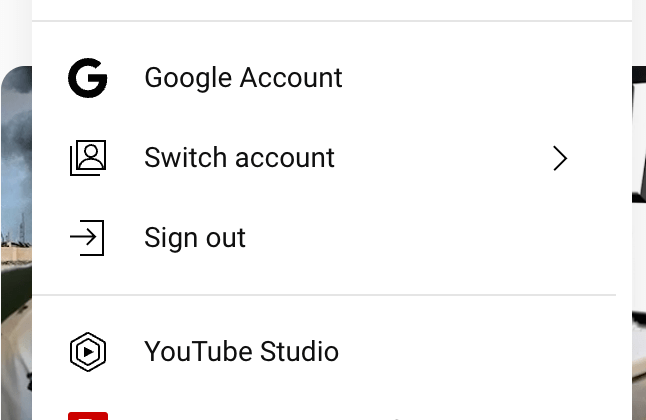
Plus other small changes, it appears that there is a drive to integrate all the various Google services together rather than having the current situation (or at least the appearance) of a collection of disconnected applications that happen to be accessible via a Google account. It’ll be interesting to see how businesses change as higher interest rates are higher for longer – personally the interest rates were too low for too longer thus created asset inflation, malinvestment etc.
Maybe this will be the time when debt is unwound and the change that should have happened in 2008-2009 will occur today, businesses that exist on cheap money keeping them alive will be eventually sifted out as the ‘tech dude grift’ are separated from those businesses that actually have business model that will result in profitability in the long term. Maybe Google and others are realising that it’s ‘start up’ culture of ‘run fast, break things’ is no longer a sustainable long term model if they wish to build up paid for services that they want small to medium businesses not to mention enterprise customers. For example, Google competes with Microsoft and their Office 365 offerings and something I have noticed is a focus on ‘fit and finish’, nailing down the basics, consolidating brands, reducing the duplication (see Google Maps and Waze, Google Podcasts being replaced by putting podcasts into YouTube Music (YouTube Music replacing Google Music)) etc. The sort of free spending free welding days have come to an end – where shareholders demand higher returns as interest rates go up and thus demand a premium for the risk of owning shares vs. sticking their money in the bank in a term deposit.
On the matter of Google and the web, the proposed Web Integrity API (link) has been rejected in favour of a very much narrowly focused API called ‘Android WebView Media Integrity API’ (link). Unlike Federated Learning of Cohorts which was rebranded as Topics API I don’t see it coming back in a rebranded form. The issues that Web Integrity API was designed to address still exist but what we could see are the creation of a number of smaller more narrow in scope APIs to address the issues raised that Web Integrity API was meant to solve.
National, ACT and NZ First are still working on an agreement amoungst themselves but that has accelerated since the final result was made known on 3 November after the special votes were counted. If I was a betting man I would say that the foreign buyers tax would be off the table but that will mean they’ll need something to bring in more money so they’ll probably keep the bright line test where it is, scrap bringing back interest only deduction, but they’ll still go ahead with a bracket adjustment and IETC adjustment.
They (National and ACT) have talked about cutting ‘wasteful spending’, talking about abstract notions of ‘cutting back office’ while ignoring it is the back office that enable the front line staff to do their job. If you want to cut back office function then who are going to do the work that was carried out by the back office? are they going to front load spending on new technology to improve productivity? are they going to change internal processes? are they going to change policies – replace one policy with another policy that doesn’t require as much bureaucracy to administrate it for example replacing working for families with a tax free threshold which would be easier to administrate. I don’t ever see them doing something on the scale but you get the basic idea that the size of the bureaucracy reflects the type of policies the government chooses to pursue.

 Matisyahu's Blog
Leave a comment