And the backlash with the on device scanning has coming in ‘thick and fast’ with the situation now made worse now that the discourse has moved from technology enthusiasts online debating on how the technology could be expanded in the future by Apple (via pressure from governments) to now mainstream outlets, or to use an internet term ‘normies’,
Although Apple said that it is ‘more private’ because it doesn’t involve scanning every photo already uploaded in the cloud then it raises questions why the alternatives were looked into such as Rene Ritchie bringing up the idea of using a relay service where the photo is uploaded and scanned by a server before it goes through to the destination in much the same way that a mail server will scan email for viruses as it delivered. The other option is more direct, why not scan it on the server as it is uploaded? Better still, why not announce it and then request for feedback and don’t include it in the net release or any future releases until there is a solution that the experts and tech community can agree on? It has appeared to me that this decision by Apple has been the result of one of two things; the first being that the hard word was put on them by government where by they would sooner voluntary compliance but if need be legislation might follow which will be a lot more onerous or secondly the top management of Apple is an echo chamber and they’ve convinced themselves ‘the plebs’ will eventually quiet down once something else comes along to take the focus off them.
There is also an interesting treasure trove (link) about the goings on behind close doors which has come out in the Apple vs. Epic Games trial where, as part of the disclosure process Apple is having to disclose emails between executives. With the big focus on ‘big tech’, breaking up monopolies and anticompetitive behaviours, it’ll be interesting to see whether anything comes from this or whether this is a big show that is kept up until the public loses interest in it. As noted prior, if Apple insist on having the store being the only way to allow users to load applications onto their phone along with requiring that all payments go through their own payments system then they’re opening themselves up to regulation – and to think that all this could easily be dealt with if they implemented side loading with notarisation like they did with macOS. The likes of Apple might have had clout with politicians in the past but I think they’re going to quickly find that they’re now dealing in a new era – the political winds are blowing, Apple can either demonstrate some contrition and make changes voluntarily or quickly find that there is a solution handed down by politicians that goes well beyond simply a few tweaks to Apple’s AppStore business model.
As for me, I’ve been using Chrome for the last few months because I’ve found Safari completely unusable on YouTube. Just as I thought that maybe Apple had fixed the issue of video play back issues, that video will stop but audio will keep playing or vice versa, it appears that once again they’re rearing their ugly head. I love using macOS but Safari has become increasingly irrelevant as the web has become more sophisticated the problem is that Safari simply hasn’t kept up and when Apple do deliver support for an open standard then either it is too late, too buggy and/or castrated in some way because of some nebulous reasons that sound more akin to ‘the five standard excuses’ listed by Sir Humphrey Appleby in ‘Yes Minister’. It’s frustrating but there is no use getting worked up because Apple has made their decision in terms of crippling Webkit to ensure it doesn’t pose as a viable threat to their AppStore (see recent ‘boasting’ by executives at the growth of their services and you can see that as the upgrade cycles for phones become longer the more dependent they’ll be on pushing services hence their iCloud+.
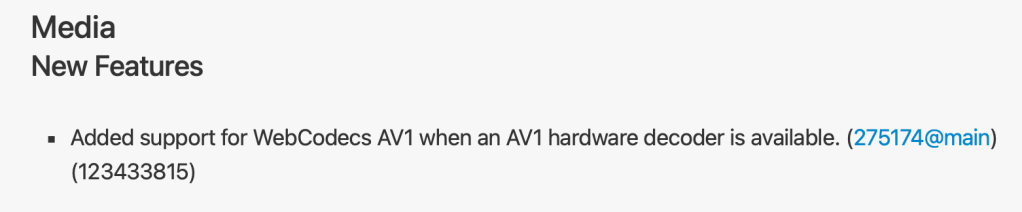
When it comes to iCloud+, before I make any drastic changes I’m going to wait until there is the announcement towards the end of September, when Apple does their iPhone event, about what iCloud+ actually looks like such as the custom domain support that was mentioned, what iOS 15 and macOS 12 is like so then I can look at it when compared to the Pixel 6 and possibly a refresh of the Chromecast with Google TV (to support AV1 – the current one doesn’t support AV1). Things could be quite different when macOS and iOS are launched, there might be limitations with Safari but the annoying bugs might have been addressed by then so I’m going to keep an open mind so that a constructive comparison can be made.
Now things start to get interesting when it comes to the discussion around CSAM where the discussion moves out of the realm of ‘arm chair expert throws around speculation’ to actual experts in the area voicing concerns and backing it up with research (link). Up until now the internet has been awash with speculation on what could happen but in this case they’ve actually done the research and, ummm, how does one put it…this is where Apple should step back and put the idea on ice in much the same way that the backlash regarding FLoC.
I think when discussing such sensitive topics that we avoid needless speculation and instead stick to the facts as they’re known – there is nothing wrong with admitting ignorance, admitting that there is limited knowledge at this point, that it is too soon to draw conclusions. It’ll be something I’ll follow closely as more independent researchers get to have a look at how it operates and whether the concerns that experts have hold merit. What I am surprised about is the fact that Apple announced it and decided to include it in iOS rather than announcing the technology, obtain feedback from independent researchers and then make a decision based on the feedback because it appears to be a bit pointless to declare that you’ve made the decision to include the technology regardless of what independent researchers say.
Finally got that $15 voucher from Countdown – I’m going to use that to buy some nice fresh organic free range eggs tomorrow which will go with my noodles (soft boiled so that they’re just firm enough to take the shell off but the yolk is still semi-runny). It’s a quick and easy meal at a good price I also grabbed some lamb and venison although lamb and venison in New Zealand is a big pricy I treat myself once or twice a week. That being said, it is cheaper than having fast food delivered so my goal is to move away from ordering in pizza in favour of having a nice meal at home with top notch ingredients which will be slightly cheaper but a whole lot healthier.
I sent a tweet to Rene Ritchie seeking clarification regarding the the whole CSAM drama by laying out what my understanding was of how the system worked (and got a reply back):
So basically it has become ‘much to do about nothing’ – the way in which people online are making it out is as though Apple just aimlessly scans what is on your device when in reality the only scanning that takes place is during the upload process – no different to a virus scanner scanning an email before sending it as to ensure there is no viruses or any other nasties attached to it. I think that eventually it’ll die down because the noise on the internet very rarely reflects the real world in much the same way that the Apple subreddit makes a lot of noise about the virtues of small phones even though in the real world their sales crash and burn because for the vast majority of people a big screen is desirable for a phone because for a significant number of people they see their phone as their ‘computer on the go’.
Although there are rumours of Apple refreshing the Mac product line up with the rumours of the ARM M1X SoC, my bug focus is on the announcement of the Pixel 6, in particular, the pro version. I’ve always had a soft sport for Android but always preferring the Android from Google in the form of the Nexus 6P and Pixel 4 XL which provides a bloatware free experience that delivers the best Google integration available. Some OEMs seem to have this idea that when customers buy their products that they’re interested in them (the OEM) when in reality for the vast majority of people the phone isa. means to an end – the end being to get online and log into Google services and if you as an OEM get in the way of that objective then you’ll quickly find that customers will look to another vendor instead.
The one thing I am also interest about is whether we’ll see a refresh of Chromecast with Google TV because the current one utilises an SoC that doesn’t support hardware accelerated AV1 decoding – I wouldn’t be surprised that if we don’t see a refresh now that we might see a refresh involving the joint venture between Samsung and Google so that eventually they get to the point that all their devices use their own custom silicon to deliver the best possible experience for end users. It is the reason why, years ago, they bought out Android because they realised that if you don’t control your own platform then it puts you in a very vulnerable position of being at the mercy of the platform provider – that the platform provider at any moment may have a change in outlook and you quickly find yourself at a disadvantage.
Well, this was an interesting start to the week. I went to get my Pfizer covid shot and made a complete mess of it by going to the wrong clinic – instead of reading the address I decided that I already knew where it was only to find out that what I thought was the clinic ended up not to be the case. Anyway, long story short, I got to the correct clinic (after rushing from the wrong clinic to the correct one while falling on slipper muddy grass resulting in muddy pants) and it was all sorted in 30 minutes. After receiving the injection you wait in the waiting room for 20 minutes to ensure that there were no negative side effects however we were advised to keep hydrated (lots of water) along with feeling tired/fatigued. I still feel tired after yesterday so I’m going to think about taking today (Wednesday) off from work – working in a call centre you have to be fully awake.
The other big of news that came out was news about Apple implementing technology that scans photos on the device as it is uploaded to iCloud by comparing ‘hashes’ of those files against a CSAM database (link) and as usual the internet has been ablaze with randoms online give their usually insightful recons on the matter. Whenever something like this comes out I always wait until the dust settles and 9/10 there will be a sane and calmly delivered analysis is delivered that attempts to give a coherent explanation of what is going on. I have my differences of opinion with Rene Ritchie but when push comes to shove he does a great job at delivering a coherent explanation when compared to the torrent of BS making their rounds.
Personally, I’ve kept out of the whole debate – reminds me of the old saying, “a debate creates a lot of spark and heat but very little illumination” and what I saw were a lot of people yelling an screaming (metaphorically) in forums so I noped out of there asap. Reddit is filling up with self righteous chest betting virtue signallers about how they’re ‘men of principle’ and how they’re ‘taking a stand’ – all I can do look at such nonsense is to close my eyes, chuckle to myself while shaking my head. I also avoid it because more often than not people end up being wrong, take the latest bit of sensationalism posted on the Android subreddit (link) where in an article they quote some no body with no track record then for it to all be turned upside down when official numbers come out and show the complete opposite (link) – The first link has 2.2K responses where as the second one (the one that corrects the first one) has only 40 responses. It appears people are only interested in reading what reinforces existing beliefs than any interest in finding out the truth. I’m seeing the same sort of nonsense with this debate – the moment someone is called out the only come back they have is “..for now!” as if it were some sort of statement that they can use as a trump card.
Yes fanboys can be annoying, they epitomise the saying “enough knowledge to be dangerous”, such as Apple fanboys saying, “Google sells your personal information to advertisers” which is wholly inaccurate and yet no matter how many times that is corrected there people who repeat it because they aren’t interested in being factually accurate, it is about repeating something they heard that they believe (gut instinct, not backed up by facts) sounds like a decisive win in their forum debates online. When conversations online are more about scoring points than having a good faith discussion of learning off each other than at that point is the moment I jump out of the conversation because it is clear that I’m wasting my time.
Out of nowhere Google has shown off the Pixel 6 to journalists however they could only show mockups in the videos being uploaded to YouTube. The focus was more a ‘top level’ macro overview rather than specifics (link) however pretty much all the tick boxes were filled when it came to confirming the rumours that have been making their round in the technology enthusiast space since the launch of the Samsung S21 and Google working with Samsung. The big focus appears to be the integration between the software and hardware which makes for an interesting situation when one considers that Apple has their own SoC, Samsung with their own SoC, Google with now their own SoC and Microsoft very much working with Qualcomm (maybe Microsoft will move beyond the Duo when it comes to Android phones).
I say tha tit is interesting because for many years the analysts on wall street convinced themselves that the future was all horizontal business models, that vertical business models like what Apple does is ‘stodgy’ and ‘old fashioned’ but it appears that once again the ‘experts on wall street’ demonstrate that they’re largely clueless about running a business. While Apple is making big investments into their services as people are keeping their phones for longer (thus slowing down growth) we’re seeing Google doing the same by not only developing their hardware division but offering more paid for services – I wouldn’t be surprised if we end up seeing more paid for services with the eventual goal to become less dependent on their advertisement business as it has become a lightning rod in recent years as concerns about consumer privacy come to the forefront.
One thing is interesting is how things are calming down in the area of messaging platforms, that after years of floating between different solutions it appears that Google has finally standardised on a platform (RCS) along with providing a framework so that third parties can build their messaging applications on while utilising the Google Jibe RCS network. Things are gradually evolving where recently end to end encrypt was enabled using the signal protocol for individual conversations but there are rumours that Google is working on enabling it for group conversations. Truth be known I only use SMS when chatting with friends and family, I got rid of my WhatsApp a few months ago so I could rid myself of any connection with Facebook.
One application I do like is Google Chat – it works a whole long nice than hangouts, it’ll be interesting to see whether long term we’ll see Meet replace duo or if they do keep it whether they call it something different- something that is a lot more descriptive given that Duo doesn’t exactly tell the end user much regarding it is supposed to do. It appears that across the board all the big players such as Google, Apple and Microsoft are rationalising their product portfolio and with the current political climate in the US regarding big tech giants I wouldn’t be surprised if we see further moves by Google to offer paid for versions – their recent move has been to provide a cheaper entry level version of YouTube Premium, I wouldn’t be surprised if we start seeing more paid for ad free versions – a paid for product has a whole lot less political sensitivity associated with it when compared to an ad support service which bring scrutiny to the ad platform regarding end user privacy.
That was rather unexpected, a week after the iOS 14.7 and maOS 11.5 were released, Apple released another update within the last 24 hours in the form of iOS 14.7.1 and macOS 11.5.1 with the update of iOS 14.7.1 weighing it at 128MB where as macOS 11.5.1 weighed in at 2.2G. Given the size of the macOS update I have to wonder whether the correction in the IOMobileFrameBuffer required recompiling of all the frameworks that are based off that. I also wonder whether this was a fix for the much reported pegasus spyware but we’ll need to ‘wait and see’ given that there is currently a whole lot of political fall out that is occurring such as Emmanuel Macron an enquiry into NSO spyware concerns (link).
Personally I find the whole industry a bit unsavoury when one considers ‘In July 2001, Russian programmer Dmitry Sklyarov was jailed for several weeks…’ (link) because he is researching the technology behind technology (and help create software that would enable customers who had purchased Adobe ebooks to convert them into PDF so then it is possible to read them on devices without an special reader) but nothing is said about shady businesses that find vulnerabilities, create malware kits and then sell them to the highest bidder? Aaron Swartz bulk downloaded articles off JSTOR and had the legal system thrown at him which resulted in him taking his own life – yet nothing is said or done about these shady purveyors of malware and spying kits?
Regarding the matter of ‘right to repair’ which I raised towards the end of my last post, there was an interesting video from Louis Rossman (link) being interviewed by Krystal & Saagar (formally from ‘The Hill’):
It is important to keep in mind, it isn’t just the right to be able to get something repaired and for the repairer to be able to order the part, it also is about ensuring that there is the ability to repair without having to deal with proprietary firmware and software which make repairs impossible (link). Part of this trend has been pushed by the industry so that you’re dependent on their network of repair agents in much the same way that razor vendors will sell you a pack with a couple of ‘free’ blades but they make up the money on replacement blades or when printers sell a printer at a low margin and make up for it on the ink sales.
With all that being said, it is important not to let the consumer off the hook for a lot of what exists in the technology space at the moment. I’d argue that a fair amount of the push has been from consumers wanting thinner, lighter and valuing convenience over longevity and efficiency. Check out any discussion on forums of people whining about how their iPhone was ‘slightly heavier’ when Apple responded to demand for a larger battery, or the complaints by reviews of a laptop that is ever so slightly heavier but has the the added bonus of upgradeable memory and other components.
As I raised earlier regarding wireless keyboard and mouse on a desktop computer – to whose benefit? imagine the batteries that one goes through and made worse that some don’t even include replaceable batteries (see Apple’s own wireless keyboards) – you’re using your keyboard at your desk all the time so what is the purpose of having it wireless? It appears to be an example of a trend within technology which I’ll call “wires are old fashioned, wireless is sleek and modern” – the fetishisation and commodification of certain technologies as representing something ‘more modern’ even though if someone stood back they would realise that in the long term it is worse for the consumer and the environment.
The question is how does one educate consumers about what they’re forfeiting – to move people away from this idea of treating what they own as disposable to one where they value what they’ve bought and demand that devices are repairable and long lasting – that a pair of earphones that only last 2 years but cost NZ$249 is bordering on the ridiculous if the battery isn’t user replaceable.
One of the things I would love to see is a requirement that hardware companies have to open source the driver source so that it can be merged back into the Android master tree so then there isn’t the situation of Android phones being sold and they stop receiving security and bug fixes 6-12 months after being launched. At the end of the day when you have a smart phone you are running a minicomputer that is connected to the internet 24 hours a day, 7 days a week so it makes sense that you need to receive regular updates as security holes are found or as general bugs are found. Many of these devices have good enough hardware specifications to last 2-3 years minimum so why isn’t there an effort to ensure that those devices keep receiving updates even after they’re launched and the OEM has lost interest. Google could provide the compile farms and I’m sure there will be enough enthusiasts willing to keep things working.
Mandate that batteries are user replaceable – we used to have user replaceable batteries. Will it add to the bulk? sure but I’d sooner have the additional bulk with the freedom of being able to replace my battery rather than having to go through the inconvenience of having to take my phone to a store or find yourself in the middle of nowhere with no ability to get a replacement. This also goes for parts because as Louis Rossman noted in his interview, the vendor which supplies Apple has the part but Apple forbids that company from selling it to him so he can complete a repair – which is particularly important when the device is out of warranty or something that Apple has decided is beyond their scope (aka, telling the customer ‘just buy a new one’ but the customer needs the content of what is on the device since it may have not all backed up to the cloud).
Apple released iOS 14.7 and tvOS 14.7 on Tuesday (Monday US time) and on Thursday (Wednesday US time) for macOS 11.5 and iPad 14.7 – a last minute bug found in the macOS 11.5 release candidate necessitated a fix followed by a new build being made available to ensure that there were no regressions. Both bring a lot of bug fixes as well as security fixes (link) but keeping in mind that when Apple list bug fixes the list isn’t always exhaustive given that you can find many of the improvements are also listed in the Webkit blog, LLVM project website and others. Long story short, when you see the changes you’re seeing ‘these are the most visible ones’ – as noted at the last update of macOS included big improvements from the Webkit project which addressed the issue I was having with the videos not playing properly (skipping, video pausing but the audio playing and vice versa).
macOS 11.5 has upgraded the system firmware to 429.140.8.0.0 from 429.120.4.0.0 and on iOS 14.7 it upgraded the modem firmware from 1.71.01 to 1.80.2 – I haven’t noticed any difference but I have a feeling the improvements bought about by the modem firmware will be relating to 5G since it is still very much a technology that yet to mature so there is a lot of room for optimisations to make it as efficient as prior generation technologies. Keeping in mind that the system firmware also includes microcode updates – I wouldn’t be surprised if it included the June 2021 microcode update.
The next version of macOS, iOS, tvOS etc. are being developed however there are no firm dates on the release – when it comes to macOS the release date could be anywhere from a week after the release of iOS all the way to mid November (macOS 11 was released 12 November 2020) so as much as I’d like to get a week off work and have fun I have to wait it out until there a formal release date. I’m still deciding whether I want to make the switch on day one or whether I should hold out until the first update is released – I guess it is something that will need to be made based on how the beta testing goes and whether, by the time it becomes ‘golden master’, that the general mood from those who participated in beta testing give it a thumbs up.
Some good news coming out regarding Microsoft’s Duo 2 – there are leaked photos of the Duo 2 with system specifications (link) and thank goodness they’ve finally added not only NFC but also a decent SoC as well (Qualcomm 888 w/ 5G). IMHO What I’d love to see is an even closer relationship between Samsung and Microsoft, merging Microsoft Pay and Samsung Pay then work to it adopted by as many banks as possible so then at least consumers can have an alternative to the Google hegemony today. I also say that regarding the Galaxy store – Samsung has an opportunity to hitch their wagon and work with Microsoft to provide an integrated alternative to the Google ecosystem – maybe create a Samsung exclusive Office 365 ecosystem where, if you have a Samsung device, you can register for a @mysamsung.com email address, access to 1TB storage, Office along with lots of other services thus growing both Samsung and Microsoft.
Tomorrow I might write something about the recent moves the United States regarding the ‘right to repair’ movement and those in power signally that their willingness to take on the challenge. I’ll cover that along with the general trend within the technology sector to push trends that don’t benefit customers – wireless mice and keyboard on a desktop computer when a wired one would be perfectly fine or this resent obsession over wireless earbuds resulting in a tonne of batteries being wasted – again, what is wrong with a wire? Anyway, I’m starting to rant already – I’ll leave that for the next blog entry.
There is a great discussion on ‘The WAN Show’ regarding the 36 states in the United States that are suing Google in regards to their Play Store and anti-trust violations.
If you’re more inclined to read an article then here is one from Bloomberg (link). Some of the biggest complaints that were made regarding the Google Play store can also be applied to the Apple AppStore as well – these include:
The inability to use a third party payment provider – either exclusively by the developer or simply as an option along side the one that Apple or Google provided. What makes the situation even worse is lets assume that the company says, “ok, we’ll only allow it through our websites so then our application is only to logon to existing accounts” then provide information in an FAQ, “to change payment methods you need to log in through the website” then you wouldn’t be allowed to do that either.
Google requires, as part of being able to get the Play Store preinstalled on your phone and many of them cannot be uninstalled by the customer along with Google applications take prominent on the Home Screen of the phone.
Trying to strong arm Samsung into ditching its own store and instead ship a rebrand Play Store but with the Galaxy branding.
There are other complaints but these are the main ones that come to my attention at the moment. I have to prefix this by saying that not all monopolies are bad – for example, we have electricity and telephone line monopolies because of the impracticality of duplicating infrastructure due to the high capital costs and how having two competitors each with their own infrastructure results in higher prices because there are fewer people in which those costs can be recuperated from due to the fragmenting of the marketplace – or what they say in the world of economics, ‘natural monopolies’. As a result of that, there can be a legitimate reason for maintaining a monopoly but that ability to continue existing in the current always comes with restrictions/regulations to ensure that said monopoly position isn’t abused.
I’m sure there legitimate reasons one could possibly come up with regarding why the Apple AppStore and Play Store have monopolies on their said platform – security knowing that what you’re buying is ‘the real deal’, consumer trust knowing their payment is being handled securely and so on. If they are going to make that argument than fair enough but at the same time that will open themselves up to be regulated like a monopoly – and what will require both sides disclosing the cost of delivering services so then a ‘fair return’ can be calculated by what ever the equivalent is of the Competition Commission.
If the companies don’t like that then there is an alternative model which is the one that Microsoft is advancing at the moment which will offer the payment and content distribution services that Microsoft can provide but equally if a vendor, such as Adobe, prefers to use their own content delivery network and payment solution then they can use that to (personally I think Microsoft should have an option for a customer to pay to unlock their Xbox (the amount the device is subsidised by) so then they can install games from Steam etc maybe include an option to install ‘desktop mode’ and turn an Xbox into desktop computer so then you can install Microsoft Office).
When these issues are bought up (along with many others) the usual refrain is “if you don’t like it, just buy something else” but the problem is that firstly we’re in a duopoly (it would have been nice for Windows 10 Mobile to be successful but alas here we are) but the best argument against that would be what took place during the DOJ vs Microsoft trial when Microsoft tried to make the same argument when claiming that they had competition in the PC operating system market and then pointed to macOS but like the situation (which was raised by the DOJ) with smartphones, it requires having to invest into a whole new device not to mention if it is moving from android to iOS (or vice versa) requires the repurchasing of software (assuming it is available) not to mention dealing with a subpar integrated experience (Android not supporting iCloud’s CardDAV, CalDAV etc). Such obstacles do not making moving between platforms frictionless – the longer one has been investigated into a given ecosystem the more difficult it is to move out of it and with the role of cloud computing and the integration of the device into the cloud then it makes it all the more difficult to move (I’m trying to move my password saved in Keychain over to Chrome – over 40 passwords, think of the average person, I doubt they have the patience I do).
Part of me wished an investigation was also done between Google and its used of it’s services as leverage to maintain Android’s monopoly on ‘generic’ smart phones through their refusal to provide their applications for the Windows Phone/Windows Mobile – Imagine if application vendors were more forth coming with providing their software on the platform then consumers would have a viable third option. Imagine if it were take step further, you buy an Android but change your mind so instead you hook it up to a computer via a USB cable, download an application from your handset vendor then within an hour you have Windows 11 Mobile on your phone ready to be used. Sigh, yeah, I rage about the application vendors not supporting the platform but it wasn’t helped when Microsoft reset the platform multiple times till eventually even Microsoft were confused as to the direction they wanted to take it in.
On a side note, there is an interesting article on Computerworld regarding the death of Software as a Service. commonly known as SaaS, where the author talks about the launch of Windows 11 and the return to yearly updates signing off on the fail ‘release early, release often’ approach that Microsoft took with Windows 10 (link) which has left a bitter taste in many users mouths. I think the idea in principle sounds good when applied to applications but operating systems aren’t applications – if you screw up something in an application it is a pain in the backside but generally everything else keeps on working. When it comes to an operating system, not only are you ensuring that the operating system is internally robust but also robust when it comes to third parties such as driver vendors, application and game developers etc. the impact of a small mistake has massive consequences where as with an application the impact is limited. The focus, from what it appears, is that Microsoft will release a feature update every 12 months and each month customers will receive the usual security updates.
I wouldn’t be surprised if the developer builds turn into a rolling release where new features are pushed out to, receive feedback in terms of bug reports and where things need to improve, then when they’re considered ‘ready’ they’re included in the next feature update of Windows. I think the move back to more of a traditional model is going to help them in the long run – provide a stable foundation and keep things moving forward in a coordinated fashion.
Wow, it has been ages since I posted something on my blog – so many things occurring at work as well as home such as getting myself better organised to cook meals at home, taking public transport rather than my scooter because the weather is absolutely atrocious or just plain cold (most nights getting down to 2-3 degrees celsius) along with buying my groceries online once a fortnight which funny enough, even if you include the cost of delivery works out cheaper (since I am not tempted to purchase things I don’t need – I go to the website, create a list, buy it and that’s that).
Lots of rumours are starting regarding Pixel 6 and the rumoured of a return of the XL model along side the smaller non-XL version. The other question is whether they’re going to start offering it in more countries – it is rather befuddling that a great product is deliberately undermined by, what appears to be, a management team at Google who haven’t seemed to grasp that there is a world outside of the United States (not to mention realising there is a country outside the borders of California).
There is the, pretty much all but officially confirmed, next version of Samsung Galaxy S series will include an AMD GPU with the early benchmarks demonstrating that the CPU on the SoC keep up with Qualcomm quite nicely and trounce the Andreno GPU in benchmarks. I wouldn’t be surprised if, with the sunsetting of CDMA2000 networks in the US and else where (the markets they use the Qualcomm SoC) that Samsung eventually standardise on shipping their Exynos based phones everywhere.
The other big win has been the consolidation of Wear OS an Tizen and quite frankly it had to happen. The idea of having multiple OS vendors in the wearable space is pretty much a nonstarter and even at this stage Apple struggles to get software vendors to write applications so getting developers to write for two other wearable OSs is pretty much out of the question. It makes little sense creating fragmentation so hopefully the Wear based devices from Samsung with the One UI 4.0 to give it a unique Samsung look and feel while being able to leverage the Wear ecosystem and integration into the Google cloud services.
There are rumours regarding the net refresh of Apple’s ARM chip being the M1X which will result in a refresh of the 13.3″ notebook into a 14″ one (13.3inch chassis but having the screen take up more space so that it is almost bezel-less) – I wouldn’t get to excited since it’ll be a incremental improvement over the M1. For me, I am waiting for the next refresh which will upgrade the processor to ARMv9 which will include SVE2 – the bigger winners I believe will be the 27inch iMac and Mac Pro users who want the extra grunt that SVE2 will bring for those work flows that were dependent on taking advantage of SSE/AVX technologies present on Intel based processors.
At this stage I am pretty agnostic regarding what my next computer will be – but my focus on this year is getting all the other parts of my life in order, lets hope that I have better success this year than I did last year.
I have to prefix this post with an apology – my aim was to get it up last week but I ended up losing track of time, lots of stuff happening at work, wanting to get into a good routine by going to bed early – I find that with the earlier starts due to taking public transport rather than using my 50cc scooter I have to get up earlier but funny enough if I were to start work at 11:30 am (getting out of bed at 10:00 am) then I’m fine with 8 hours sleep but if I start at 9:30 am (getting out of bed at 8:00 am) with the same amount of sleep then I am even more tired. I have to admit, I’m more of a night owl – in my previous life working in hospitality I worked the night shifts such as 4:00 pm to 1:00 am meaning I wouldn’t get home until maybe 2:00 am so my body was used to such a schedule. Ideally I’d love to go back to at least to being able to get up at 10:00 am but oh well, at least I have a job which is the important thing.
The much proposed reaction to the launch of Windows 11 – both the mainstream ‘livestream’ followed by the more developer centric live stream (the Microsoft equivalent of the WWDC keynote followed by the platform state of the union) – although they had problems streaming it (according to one of Brad Sams recent videos on YouTube the streaming platform crashed), the event eventually got off the ground and the public was rewarded with an optimistic vision of the future being offered by Microsoft while still remaining familiar.
There was a strong emphasis by Panos Panay (chief product officer) of moving the platform forward while still keeping it familiar. The emphasis being made to arrest concerns that this was going to bet a disruptive change, that there were going to be changes to the UI that would anger long time users, that compatibility will be broken etc. After Windows 8 I get the feeling that Microsoft want to reassure its user base, particularly the enthusiast community who are very much influencers (of friends and family) where they’re commonly referred to as ‘the one whose good with computers’) who can have an impact on whether there is wide spread adoption – fail to win them over and feel the consequences (see Windows Vista and Windows 8).
Part of what has been shown off is the new UI language which is very much inline with where I think Microsoft is wanting to take WinUi 3.0 (Project Reunion being the large project which WinUI 3.0 fits under) in the future. It still very much has the legacy UI visible given that the transition from Control Panel to Settings is still very much underway, the gradual componentisation of the Windows Shell (the Windows start menu is in its own process which has improved performance) so we could eventually see (based on the promotional material) a new shell using WinUI 3.0 but in the mean time Microsoft is wanting to make the UI a lot more visually pleasing.
The system specifications have increased since Windows 10, WDDM 2.0 is the minimum required thus making DirectX 12 the minimum supported, TPM 2.0, a relatively modern 64bit CPU etc. is an indicator to me that Windows 11 is a starting point by Microsoft to start pushing Windows 11 in a direction where future releases will take advantage of those higher specifications (Microsoft also have probably modelled future sales on Windows 11 being primarily through it being distributed through OEM channel as people upgrade their computers with a small number upgrading their their existing devices). For example, if you have a look at project unity, the work that was taking place with Windows 10X, I wouldn’t be surprised if we end up seeing win32 support pushed into a virtual machine (hence needing CPUs that support virtualisation) and the new native API becomes not necessarily a ground up clean room replacement to win32 but rather, taking the various components to give Microsoft developers the freedom to break compatibility in the process of modernise the frameworks so then eventually Project Reunion comes a modern framework that can span various version of Windows as well as various devices (see Xbox).
What I am happy to see is Microsoft’s willingness to get rid of complexity and features from the operating system such as removing Cortana, simplifying search so it is no longer the glorified mess where even the most basic searches turn into a disaster (see the many years of complaints regarding search in Windows 10) – I hope that it is a trend in the long run to eventually strip non-core features out of the system, push them into the store and upgrade them gradually over to a modern look and feel (with he benefit of users saving storage space by not having to install features they don’t need).
The developer preview that Microsoft has made available is still missing features such as Android application support along with Teams integration plus a few other features but there has been a cleaned up Explorer which I love:
Improvements like this along with rumours regarding the Pixel 6 and Android 12 make the idea of ‘jumping ship’ a lot more tempting given that the gap between Windows and macOS are closing the combine that with the great hardware being put out by Microsoft (the surface range of devices) along with the improved integration between Windows and Android devices via the Phone Companion application which enable one to send/receive text messages as well as make/answer phone calls in much the same way that one can do on macOS with an iOS device. There is a great video from Zac Bowden from Windows Central where he goes into detail showing off the visual changes.
To get a good incite into where Windows 11 is heading then check out ‘Windows App SDK’ over on github (link) where you’ll find a lot of the future development taking place when it comes to the frameworks Microsoft is working on for app developers. There is also plenty of discussion over on the Chromium developer mailing lists as well as the checking out the ‘What’s next with Microsoft Edge’ page (link) which covers Microsoft only features that Microsoft is working on, when they’ll come available – many of the features linking back to the Microsoft cloud or what they’re working on which will require new hardware such as ‘Control-flow Enforcement Technology (CET)’ which is an important feature for Windows 11 which is why the minimum specifications have been increased.
There has been some backlash regarding the increase in minimum specifications but in my not so humble opinion I think that Microsoft just needs to weather the storm and ignroe the noisy ‘enthusuasts’ – if Windows was designed by the incoherent demands of enthusiasts it would en up resembling something like the car Homer designed when he bet his long lost half brother. When you have a look at the security reasoning (link) along with reports of up to a 40% performance hit if you enable said features in Windows 10 on devices that don’t support said features in hardware mode then you quickly that Microsoft is doing it for the good of the customer as to avoid a fiasco like Vista again where those who had ‘Vista Basic’ badged devices had a horrible experience.
It’ll be interesting to see how the two competing platforms perform because at the moment I can’t help but find that the whole WWDC 21 this year was pretty depressing – and this is coming from a long time Mac user (20+ years) with a modest set of things that I would have loved to see Apple deliver on but haven’t done so for many years. For me what I would have loved to see is Apple implement the Webextension API so that at the very least it has feature parity and compatibility with Firefox (which would open up a huge market for developers to target Safari), to improve HTML5 compatibility so the I can use Amazon Connect (Amazon’s cloud based PBX solution) if I have to work from home because right now I have to go out of my way to install Chrome when ordinarily I prefer using Safari due to it being light weight.
When I mean depressing, what I saw was time and energy being spent on what I’d consider gimmicky features given that there are a laundry list of issues that Apple should be focusing on. I’ll give you that they have finally bought custom domain support as part of their Cloud+ platform which is good because truth be known I was expecting Apple implementing the Webextension API to feature parity with Firefox before they would ever get interested in adding more sophisticated features to their iCloud service (given that no one is directly paying for it I was never expecting it to get to the level of sophistication as what Microsoft or Google provides) but I tolerated it because it was ‘good enough’ to get the job done.
As for my hardware, at the moment I think I can squeeze another 2-3 years out of it which would make them 5-6 years old by the time I get around to replacing them and when I do it’ll be interesting to see but assuming that Microsoft use Windows 11 as a springboard to advance Windows forward and AMD/Intel keep fighting the good fight on improving their product line (and Microsoft making great Surface) it appears that Apple has some much needed competition. Oh, and Samsung offering 4 years of long term support for their Galaxy S line? *chief’s kiss* particularly when you consider that next year the next Galaxy will use an SoC which makes use of an AMD GPU. I have to admit – I’d be tempted to build my own rig but for a laptop I’d go with Surface.
But that being said, Apple has joined a consortium called ‘Webextensions Community Group’ (link) that will hopefully move the API set forward resulting in Apple a set of APIs that all the in-dusty agree with which will ensure that developers can ‘write once, deploy everywhere’ rather than the current situation of having to deal with browser quirks and API differences – this matrix is a good way to keep track of those differences (link) which can range from something that is implemented but differently all the way through to a feature not being implanted at all with no intention by the browser vendor of ever implementing it.